Entre Nubes
(2016-2019)
Colombia has one of the highest levels of inequality and internal displacement in the world. Decades of armed conflict, compounded by institutional abandonment, have resulted in the state being unable to exercise full governance over much of the country’s territory. While the conflict once centered on government forces, paramilitary groups, and leftist guerrillas, violence today is largely driven by dissident groups and criminal organizations competing for control of drug trafficking routes and other illicit economies.
This painful legacy has left many rural communities in Colombia in extreme precarity, forcing millions to abandon their homes and migrate to cities in search of opportunities. As a highly centralized country, a significant portion of this internal migration pours into the capital, Bogotá. The city’s inability to keep up with its rampant population growth has resulted in much of the periphery expanding through informal settlements.
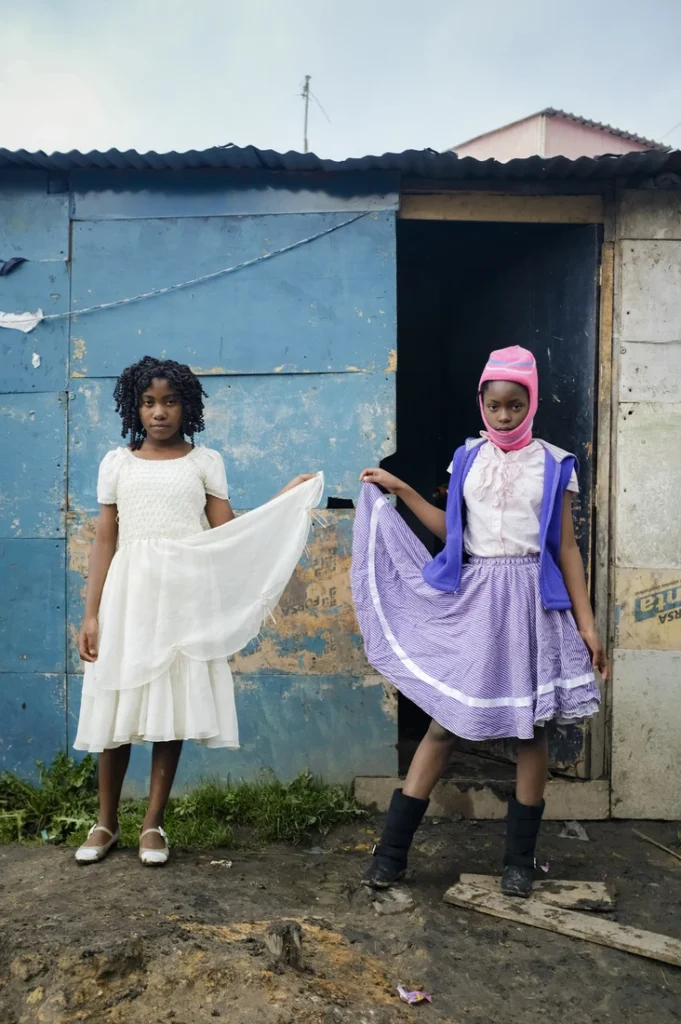
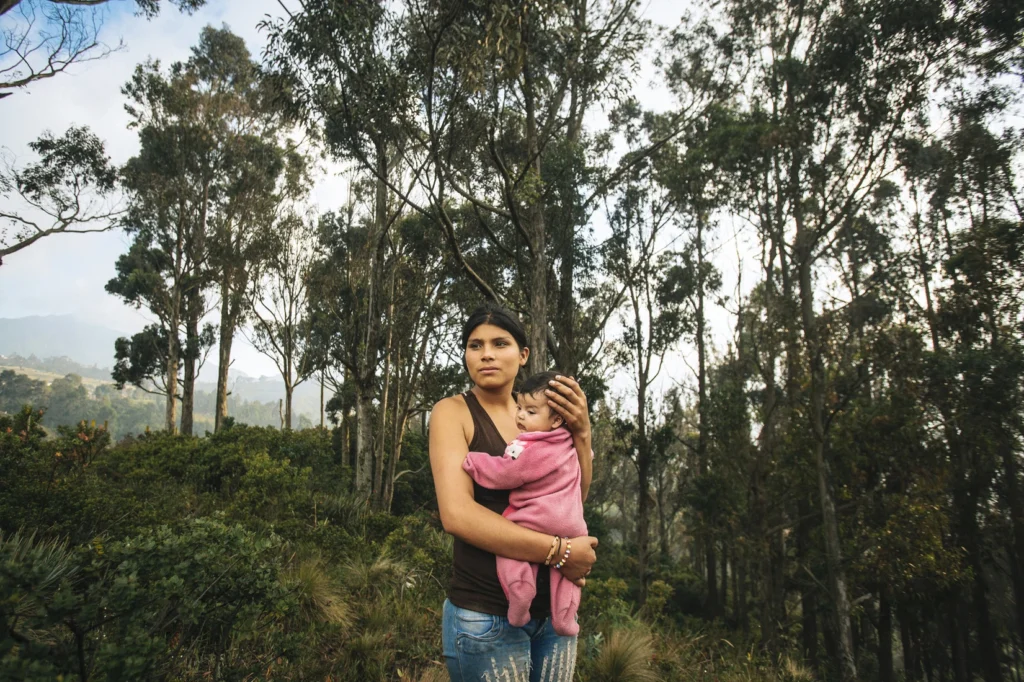
Entre Nubes is an interdisciplinary artistic project developed in San Germán, an informal settlement on the southern outskirts of Bogotá, adjacent to the Entre Nubes Nature Reserve.
Ana Vallejo photographs and interviews displaced families who have settled in the neighborhood, including Indigenous and Afro-Colombian families, former military personnel, and former guerrilla members, reflecting the country’s complex social and political history.
Living in informality requires surviving constant attack. Here, illegal economies thrive, land ownership is constantly disputed, public services are scarce, local authorities are against you, and violence often becomes the primary means of resolving conflict.
By documenting personal stories and ways in which the community organizes to sustain itself and persevere, Entre Nubes seeks to reveal a portrait of the neighborhood beyond the stereotypical and dehumanizing representations of informal territories.
As part of the project, Ana Vallejo organized and funded a series of community-based artistic workshops that proposed art as a tool for connection and collective action. Over the course of three years, residents collaborated with more than 25 renowned street artists to paint thirteen houses throughout the neighborhood, transforming the urban landscape while strengthening community ties.
CLICK ON EACH PHOTO TO LEARN MORE